Structure Bonds: How Small Assisted Living Homes Foster Real Relationships
Business Name: BeeHive Homes of White Rock
Address: 110 Longview Dr, Los Alamos, NM 87544
Phone: (505) 591-7021
BeeHive Homes of White Rock
Beehive Homes of White Rock assisted living care is ideal for those who value their independence but require help with some of the activities of daily living. Residents enjoy 24-hour support, private bedrooms with baths, medication monitoring, home-cooked meals, housekeeping and laundry services, social activities and outings, and daily physical and mental exercise opportunities. Beehive Homes memory care services accommodates the growing number of seniors affected by memory loss and dementia. Beehive Homes offers respite (short-term) care for your loved one should the need arise. Whether help is needed after a surgery or illness, for vacation coverage, or just a break from the routine, respite care provides you peace of mind for any length of stay.
110 Longview Dr, Los Alamos, NM 87544
Business Hours
Walk into a small assisted living home at breakfast time and you can generally tell within thirty seconds whether real relationships live there.
Sometimes you see it in a caregiver carefully tapping a resident's preferred mug before pouring coffee, because that noise helps her orient to the early morning. Or in the way a nurse leans down to eye level to ask about last night's ballgame, understanding that conversation is what will coax a reluctant gentleman to take his medications.
Those small, repeated minutes are the genuine work of senior care. Buildings, licenses, and care strategies matter, but it is the daily bonds in between locals, personnel, and families that figure out whether a location feels like a home or a facility.
Small assisted living homes, especially those with less than about 16 residents, are uniquely structured to foster those bonds. They are not perfect, and they are wrong for each individual, however their scale and culture produce conditions where relationships can do what no staffing algorithm ever can.
What "small" really means in assisted living
The expression "small assisted living home" can explain a few different models.
In most states, it often refers to a residential care home, often called a board and care, group home, or adult household home. Image a regular home in a neighborhood, customized for security and availability, certified to provide assisted living services for 4 to 10 older grownups. Caretakers survive on or near the home, and everyone shares typical spaces for meals and activities.
There are also shop assisted living neighborhoods with 12 to 16 residents per home, clustered on a school. Each home operates as its own micro-community, with a devoted staff team and a shared kitchen area and living room.
The typical thread is scale. Fewer locals, fewer layers of management, and a daily rhythm that looks more like a home and less like an institution. That scale is not just a lifestyle option. It deeply impacts how relationships form and how elderly care is experienced day to day.
Why relationships matter more than amenities
Families typically start their search for senior care focused on the visible features: personal spaces, upgraded restrooms, activity calendars, and food. Those things are not trivial, and they inform you a lot about a service provider's concerns. But throughout the years, whenever I have actually followed up with households 6 or twelve months after a move, their remarks gravitate to relationships.
They talk about the caregiver who knew their mother's wedding event tune and played it when she was agitated. Or your home manager who texted a quick picture of Dad at the table, grinning with icing on his chin throughout a birthday event. They speak about trust: "I can sleep in the evening due to the fact that I understand they actually like her."
For older grownups, particularly those facing cognitive decline, movement losses, or major health conditions, relationships are not a soft extra. They are the primary way safety, self-respect, and quality of life are provided. The proof for this appears in a number of useful methods:
Residents who feel seen and known tend to share symptoms previously, which can prevent hospitalizations. Those with steady, familiar caregivers often experience less anxiety, less behavioral symptoms, and better sleep. Families who feel included are more likely to share comprehensive histories and choices that make care more effective.
Those outcomes do not need a big facility with substantial programs. They require consistent individuals who have the time and psychological area to develop bonds.
How small homes alter the social math
In a large assisted living community with 80 or 100 citizens, even exceptional staff struggle against scale. One nurse might be accountable for lots of care strategies, and caregivers might turn throughout multiple hallways. Staff find out faces, however deep knowledge of each person is more difficult to establish and maintain.
In a small assisted living home, the math shifts.
If a home has 8 residents and a 1-to-4 caregiver ratio during the day, each staff member is accountable for the same small group of individuals over months, sometimes years. They see patterns. They know that Mr. Lopez will reject pain if you ask him straight, but he constantly rubs his shoulder when his arthritis flares. They recognize that when Ms. Greene moves her chair two feet better to the window, it is her method of signaling she is overwhelmed and requires quiet.
That connection enables caretakers to offer elderly care that is both clinically mindful and emotionally tuned. It likewise gives homeowners a sense of predictability. They know who is entering into their room in the early morning. They understand whose voice they will hear at night.
Families feel that difference too. They are not explaining the same story to a turning cast of personnel. They are developing relationships with a small group, and with time, that becomes genuine partnership.
Everyday life as the engine of connection
In small homes, almost whatever occurs in shared space. That layout naturally turns day-to-day tasks into opportunities for connection.
Meals are a good example. In a big community, meals often resemble dining establishment service. Citizens show up in waves, servers move quickly from table to table, and there is pressure to turn over the dining room. In a small home, breakfast may unfold over ninety minutes around a couple of tables. Personnel are cooking a couple of feet away, talking as they plate food. A resident may help stir eggs or set out napkins. Another might sit in the cooking area simply to smell the toast and coffee.
Those ordinary interactions develop familiarity at a pace that feels human. No one has to arrange "socializing." It is simply woven into existing routines.
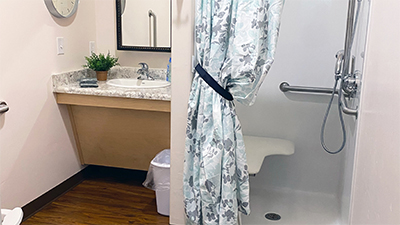
The same opts for personal care. When caregivers assist the same locals each day with bathing, dressing, and mobility, they find out subtle hints that never make it into a care plan. They know which jokes fail, which topics dependably light up a conversation, and which silence is peaceful rather than withdrawn. Over months, those habits collect into trust.
Trust is what makes it possible to say gently, "You appear more worn out this week, let's speak to the nurse," or "I discovered you are eating less, are you feeling okay?" Citizens are more likely to accept assistance and medical attention from individuals they know well and like.
The role of environment and design
You do not require luxury surfaces for a small assisted living home to feel relational. You do need thoughtful design.
I have actually seen modest homes, with older furniture and basic decoration, outshine brand brand-new centers because they understood how space supports connection. The greatest homes tend to share a couple of characteristics.
Common areas are main and inviting, not hidden. When staff needs to stroll through the living-room to get to the workplace or kitchen, there are more natural touchpoints with homeowners. Corridors are short. You can not avoid passing each other several times a day.
Rooms are close enough that citizens hear life taking place outside their doors. The clatter of dishes, the murmur of voices, a laugh from the TV space. For somebody who has just left a long-time home, those sounds can soften the strangeness of a move.
Outdoor space is available without a lot of logistics. A small outdoor patio or garden actions far from the living room can end up being the setting for spontaneous cups of coffee, call with household, or peaceful time with a caretaker nearby. It is hard to overemphasize the relational worth of being able to state, "Let's grab a sweatshirt and sit outside for 10 minutes," rather of, "We require to sign out, find someone to escort us, and browse an elevator."
Design can not ensure connection, but it can either support or sabotage it. Small homes, by virtue of their size, normally start with an advantage.
When respite care ends up being the bridge
Respite care is frequently neglected as an effective relationship contractor. Families consider it as a pressure valve for exhausted caregivers, which it absolutely is. However brief remain in a small assisted living home can likewise create a gentle entry point into long term care and relational continuity.
I as soon as dealt with a female caring for her partner with innovative Parkinson's. She was adamant that he would never ever "go into a home." She consented to a three-day respite stay only due to the fact that she required surgery and had no other choice. The home was a small, 7-bed house with a live-in caregiver.
By the end of that stay, he had a running joke with one caretaker about his preferred baseball team and a nighttime routine of tea and cookies with another. His other half was shocked to hear him describe staff by name and to explain them as "the women who make me walk when I do not want to."
Six months later on, when his needs had actually progressed, the same home had a long-term space open. The transition was far less traumatic because he was returning to familiar faces and a known environment. The bonds developed during respite care carried forward into their long term plan.
Short-term stays work both ways. Households get to see how a home actually functions, and personnel learn more about a person's habits and preferences without the pressure of an instant permanent relocation. When respite care takes place in a small setting, that knowing and bonding can be incredibly deep for such a brief time.
Staff culture: the backbone of genuine relationships
Physical size and design set the stage, but staff culture decides whether relationships grow or wither. I have toured small homes that technically fulfilled every requirement yet still felt mentally flat due to the fact that personnel were stressed out, unsupported, or treated as interchangeable labor.
Healthy small homes invest intentionally in 3 areas of personnel culture.
First, they prioritize consistency. Scheduling is developed to offer homeowners and personnel stable pairings whenever possible. That suggests withstanding the temptation to fill open shifts with whoever is readily available, despite fit, and instead constructing a core team that knows the locals inside out.
Second, management is present and accessible. In numerous strong small homes, the owner, administrator, or nurse spends time in the living-room, not just in the office. That visible presence makes it much easier for caretakers to raise concerns rapidly and for homeowners to feel that "the person in charge" is not some distant figure.
Third, psychological labor is acknowledged, not neglected. Excellent leaders know that genuine relationships are stunning and exhausting. When a resident passes away, they provide personnel space to grieve. When a family is especially demanding, they support caretakers with limits and interaction strategies rather than leaving them to absorb all the stress.
Without that support, the extremely intimacy that makes small homes unique can turn into a problem. Caregivers who are deeply attached to residents require structures that assist them sustain that nearness over years.
Trade-offs and restrictions of small assisted living homes
The picture is not consistently rosy. Small assisted living homes have real restraints, and it is necessary for families to weigh trade-offs honestly.
On the medical side, small homes typically do not have on-site nurses 24 hours a day. Numerous run with nurse oversight during organization hours and on-call assistance after hours. For locals with complicated medical needs, that model can work well if the staffing is experienced and the home has strong relationships with home health and hospice providers. It may not be ideal for somebody who needs frequent in-person nursing assessments or quick access to a large range of therapies.
Amenities are also different. You are not likely to discover a complete health club, several dining locations, or a packed everyday calendar led by a large activities group. Some locals love the quieter, more natural rhythm of a small home. Others miss out on the energy and range of a larger community.
Financially, small homes can be equivalent to mid-range assisted living communities, however they in some cases have fewer methods to cross-subsidize care. When a resident's requirements increase significantly, the expense of care may rise to show the higher hands-on support. Families should review how the home manages rate boosts and what happens if care needs outgrow the license.
There is also the concern of fit. A resident who is extremely introverted might discover constant distance to the exact same seven individuals more draining pipes than a setting where they can be confidential in a crowd. Conversely, somebody who is utilized to a hectic social life may initially feel minimal in a small group if the other locals are less talkative or have significant cognitive decline.
The ideal setting depends upon personality, health needs, household involvement, and monetary realities. The strength of small homes is relational, however that strength needs to be weighed against everyone's more comprehensive situation.
Families as part of the circle, not visitors at the edge
One of the fantastic advantages of small homes is the ease with which families can be woven into daily life. When there are only a handful of citizens, it is natural for staff to find out prolonged family names, schedules, and dynamics.
I have actually seen children drop by on their lunch breaks, bring soup, and sit at the cooking area table while caretakers bustle around. I have watched grandchildren curl up on the living room sofa with a tablet, half seeing animations and half listening to their grandparent's music. Those patterns are easier to sustain when you are browsing a driveway and a front door, not a large car park and an official reception area.
That informality has limitations. Personnel still require to safeguard resident personal privacy and maintain infection control and security. However within those limits, small homes can deal with families as partners instead of guests.
Strong homes encourage useful involvement. Member of the family might assist embellish for holidays, bring recipes for favorite meals, or sign up with care plan conversations in a more conversational way than a large formal meeting. When something changes, excellent homes reach out quickly: "Your mom slept a lot more this week, can we speak about adjusting her routine?"
Those ongoing, two-way discussions assist everyone respond earlier to both medical and psychological shifts. The resident benefits from a consistent message and a team that feels lined up, rather than captured between staff and family opinions.
How to acknowledge a relationship-centered small home
Touring assisted living choices can be overwhelming, particularly if you are doing it under time pressure. When you walk into a small home, pay as much attention to the feel of interactions as you do to the décor.
Here is a brief checklist of what to look and listen for.
- Staff call residents by name and use warm, familiar tones, and homeowners react with convenience, not shocked surprise.
- You hear bits of individual history woven into discussion, such as references to previous tasks, relative, or hobbies.
- The speed feels human, not hurried, even if staff are clearly busy and moving with purpose.
- There are indications of individual preferences in the environment, such as personalized space décor or particular snacks or drinks within simple reach.
- When you ask personnel about a resident who is not present, they can describe that individual's regimens and preferences in concrete information, not simply in generalities.
If those elements are present, there is a great chance you are looking at a place where bonds are valued and supported, not left to chance.
Questions to ask when evaluating a small home
Families frequently inform me they are not sure what to ask on a tour beyond the fundamentals about expense and schedule. Thoughtful questions about relationships and connection can expose a lot about how a home really operates.
Consider utilizing concerns like these as discussion beginners:
- How do you decide which caregiver works with which residents, and how frequently do those tasks change.
- When a resident's behavior or state of mind modifications, what is your normal process before calling the family or medical professional.
- Can you share a current example of how personnel adjusted care based upon being familiar with a resident much better over time.
- What chances do families need to remain associated with daily life, beyond scheduled care strategy conferences.
- When a resident is nearing end of life, how do you support both them and the other homeowners emotionally.
The specifics of the responses are lesser than the clarity and thoughtfulness behind them. Strong homes can explain real situations, not just policies. They speak naturally about residents as entire individuals, not "beds" or "cases."
When small really does seem like home
After years of strolling households through the maze of senior care alternatives, I have concerned acknowledge a particular quality in the healthiest small homes. It does disappoint up on a brochure. You observe it in the way time feels inside the house.
There is a steadiness, a sense that individuals understand what will take place next and who will exist. There are small rituals that anchor the day: a favorite TV show at 4 p.m., a specific prayer before dinner, music on Sunday mornings, a staff member who always hums the same tune while folding laundry.
Residents are not secured from loss or decline. Those truths still come. However they encounter them in the context of real relationships, with people who have actually sat next to them through common Tuesdays as well as hard days.
That is the deeper guarantee of small assisted living homes. Not perfection, not endless activities, but a sort of belonging that makes the last chapters of life less lonely and more human. When families find that, they are not just choosing a care setting. They are picking a circle of individuals who will bring their parent, partner, or grandparent through life respite care with listening, memory, and affection.
For numerous older adults and their families, that is the bond that matters most.
BeeHive Homes of White Rock provides assisted living care
BeeHive Homes of White Rock provides memory care services
BeeHive Homes of White Rock provides respite care services
BeeHive Homes of White Rock supports assistance with bathing and grooming
BeeHive Homes of White Rock offers private bedrooms with private bathrooms
BeeHive Homes of White Rock provides medication monitoring and documentation
BeeHive Homes of White Rock serves dietitian-approved meals
BeeHive Homes of White Rock provides housekeeping services
BeeHive Homes of White Rock provides laundry services
BeeHive Homes of White Rock offers community dining and social engagement activities
BeeHive Homes of White Rock features life enrichment activities
BeeHive Homes of White Rock supports personal care assistance during meals and daily routines
BeeHive Homes of White Rock promotes frequent physical and mental exercise opportunities
BeeHive Homes of White Rock provides a home-like residential environment
BeeHive Homes of White Rock creates customized care plans as residents’ needs change
BeeHive Homes of White Rock assesses individual resident care needs
BeeHive Homes of White Rock accepts private pay and long-term care insurance
BeeHive Homes of White Rock assists qualified veterans with Aid and Attendance benefits
BeeHive Homes of White Rock encourages meaningful resident-to-staff relationships
BeeHive Homes of White Rock delivers compassionate, attentive senior care focused on dignity and comfort
BeeHive Homes of White Rock has a phone number of (505) 591-7021
BeeHive Homes of White Rock has an address of 110 Longview Dr, Los Alamos, NM 87544
BeeHive Homes of White Rock has a website https://beehivehomes.com/locations/white-rock-2/
BeeHive Homes of White Rock has Google Maps listing https://maps.app.goo.gl/SrmLKizSj7FvYExHA
BeeHive Homes of White Rock has Facebook page https://www.facebook.com/BeeHiveWhiteRock
BeeHive Homes of White Rock has an YouTube page https://www.youtube.com/@WelcomeHomeBeeHiveHomes
BeeHive Homes of White Rock won Top Assisted Living Homes 2025
BeeHive Homes of White Rock earned Best Customer Service Award 2024
BeeHive Homes of White Rock placed 1st for Senior Living Communities 2025
People Also Ask about BeeHive Homes of White Rock
What is BeeHive Homes of White Rock Living monthly room rate?
The rate depends on the level of care that is needed (see Pricing Guide above). We do a pre-admission evaluation for each resident to determine the level of care needed. The monthly rate is based on this evaluation. There are no hidden costs or fees
Can residents stay in BeeHive Homes until the end of their life?
Usually yes. There are exceptions, such as when there are safety issues with the resident, or they need 24 hour skilled nursing services
Do we have a nurse on staff?
No, but each BeeHive Home has a consulting Nurse available 24 – 7. if nursing services are needed, a doctor can order home health to come into the home
What are BeeHive Homes’ visiting hours?
Visiting hours are adjusted to accommodate the families and the resident’s needs… just not too early or too late
Do we have couple’s rooms available?
Yes, each home has rooms designed to accommodate couples. Please ask about the availability of these rooms
Where is BeeHive Homes of White Rock located?
BeeHive Homes of White Rock is conveniently located at 110 Longview Dr, Los Alamos, NM 87544. You can easily find directions on Google Maps or call at (505) 591-7021 Monday through Sunday 9:00am to 5:00pm
How can I contact BeeHive Homes of White Rock?
You can contact BeeHive Homes of White Rock by phone at: (505) 591-7021, visit their website at https://beehivehomes.com/locations/white-rock-2/, or connect on social media via Facebook or YouTube
Viola's offers familiar Italian comfort food that residents in assisted living or memory care can enjoy during senior care and respite care visits.